
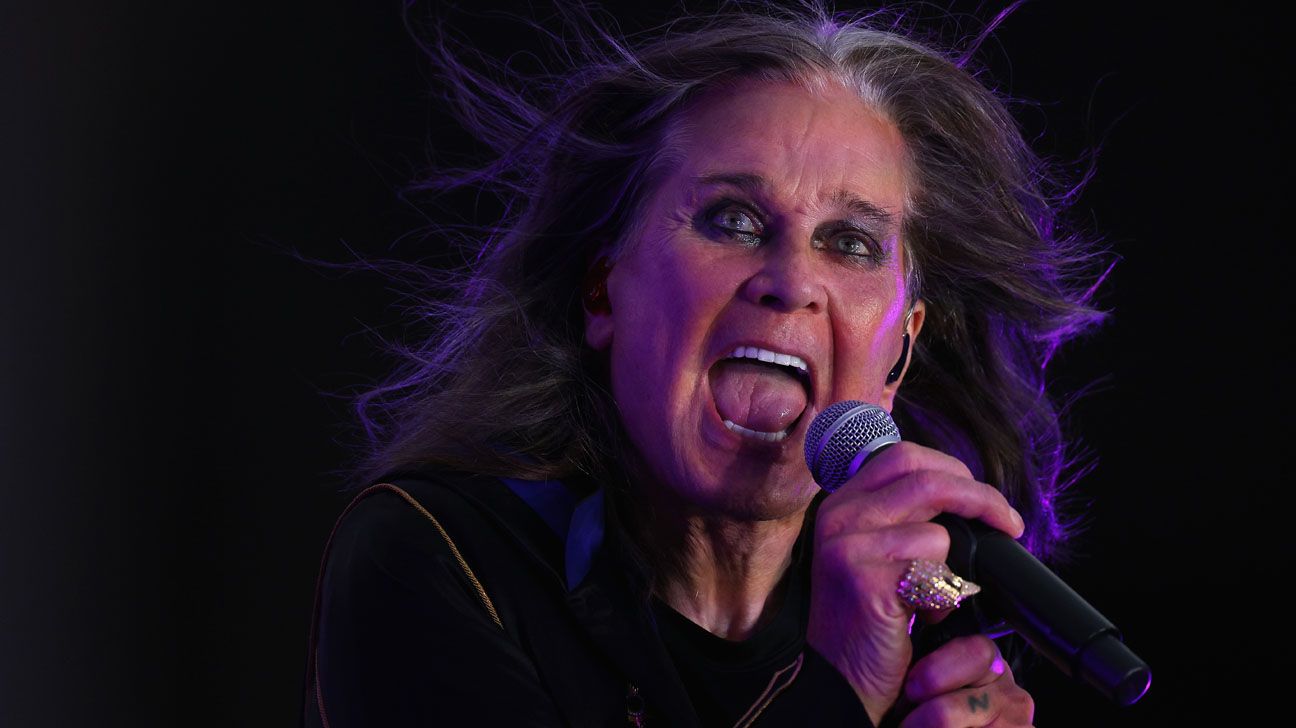
- The effects of Parkinson’s disease are back in the spotlight after the death of singer Ozzy Osbourne.
- Experts say Parkinson’s can cause a wide variety of health issues, from falling to tremors to slow movement to cognitive impairment.
- They say regular exercise, a balanced diet, and memory games can help ease symptoms.
The death of heavy metal singer Ozzy Osbourne is shining a spotlight on the difficulties people have while living with Parkinson’s disease.
Osbourne, the front man for the 1970s group Black Sabbath, died this week at the age of 76. No official cause of death has been announced.
Osbourne had numerous health issues, some of which stemmed from his heavy use of alcohol and drugs.
In 2020, the musician and reality television star revealed he had been diagnosed with Parkinson’s disease. He said he had sustained injuries the previous year after falling, a common occurrence for people with this neurological condition.
Osbourne said in a 2023 interview he had been through “absolute hell” due to his health issues.
Earlier this year, Osbourne’s wife, Sharon, reported that her husband was unable to walk due to Parkinson’s, but the disease had not affected his voice.
Osbourne performed on July 5 at a farewell concert with his former bandmates. Due to his inability to stand or walk, he sat on a throne while he sang.
Parkinson’s disease can produce a wide variety of health issues
The Parkinson’s Foundation estimates there are slightly more than 1 million people in the United States living with Parkinson’s disease.
About 90,000 people in the U.S. are diagnosed with the condition every year. About 96% of those diagnosed are over the age of 50.
Parkinson’s disease is a nervous system disorder that impacts balance and movement. It’s caused by the loss of nerve cells in the brain that control the production of the chemical dopamine.
Genetic and environmental factors have been targeted as possible risk factors for Parkinson’s.
Experts note that a wide variety of health issues can be caused by Parkinson’s. Among them:
- Tremors
- Rigidity in muscles
- Slowness of movement
- Higher risk of falls
- Cognitive impairment
- Lower blood pressure
- Constipation
- Sexual dysfunction
- Sleep impairment
- Slurred speech
“Parkinson’s disease has been associated with a host of risks including motor symptoms like tremor, stiffness, and slowness but also non-motor symptoms such as depression, constipation, apathy, and cognitive changes,” said Michael Okun, MD, a medical advisor to the Parkinson’s Foundation and the co-author of the book “The Parkinson’s Plan.”
“As the disease progresses, risks of falls, infections, and complications from immobility rise, especially if not properly managed,” he added.
Experts say these symptoms can seriously impair a person’s daily life.
“Parkinson’s disrupts everyday routines including getting dressed, walking, writing, and even speaking,” Okun told Healthline. “These symptoms commonly worsen and become more challenging over time. The disease also affects mood, energy, and sleep, so it’s not just the visible tremor.”
Daniel Truong, MD, a neurologist and medical director of the Truong Neuroscience Institute at MemorialCare Orange Coast Medical Center in California and editor in chief of the “Journal of Clinical Parkinsonism and Related Disorders,” agrees that the limitations produced by Parkinson’s can be quite serious.
“It affects the movements due to slowness. The stiffness interferes with movements such as using utensils and buttoning shirts. Rigidity reduces range of motion, comfort, [and] pain,” Troung told Healthline.
“Multitasking and decision making may be impaired, affecting work or managing finances. Depression, anxiety, and apathy can reduce motivation and social engagement,” he added.
Truong and Okun both say falling is a chief concern for people living with Parkinson’s.
“Falls are a major health concern in people with Parkinson’s disease and can lead to a cascade of serious complications that significantly worsen overall health and quality of life,” said Truong.
“Falls are a serious concern in Parkinson’s,” added Okun. “A single fall can lead to broken bones, head injuries, or hospital stays, which can cascade into infections, loss of mobility, and even cognitive decline. Preventing falls through balance training, home safety, and medication adjustments is an essential element to a solid Parkinson’s treatment plan.”
How to improve quality of life while living with Parkinson’s
Actor Michael J. Fox was diagnosed with Parkinson’s disease in 1991 at the age of 29.
The star of the “Back to the Future” films and an Emmy winner for the television shows “Family Ties” and “Spin City” made his diagnosis public in 1998.
He formed the Michael J. Fox Foundation for Parkinson’s Research in 2000. The organization has raised more than $2 billion for Parkinson’s research.
Fox has spoken publicly about his life with Parkinson’s. The tremors from the condition cause him to constantly sway back and forth. He has been injured from falling numerous times. His speech can be mumbled. The 64-year-old father of four says the disease “sucks” but “it didn’t defeat me.”
Troung and Okun say there are a number of lifestyle practices people with Parkinson’s can adopt to help improve their quality of life.
Exercise is at the top of the list. Diet is also an important factor.
“People with Parkinson’s disease can significantly improve their quality of life through a variety of lifestyle activities,” said Truong. “These activities help manage symptoms, slow progression, and promote emotional and physical well-being. Regular, targeted exercise improves motor function, balance, mood, and even cognition. These are aerobic exercise, balancing exercise.”
“Exercise is medicine for Parkinson’s and can include everything from walking, dancing, and boxing to yoga and tai chi,” added Okun.
For diet, Truong recommends:
- High antioxidant foods
- Fiber-rich food to prevent constipation
- Spacing out heavy protein meals
He also says cognitive engagement exercises such as puzzles, music therapy, and memory games can be beneficial.
Okun says an active lifestyle can pay significant dividends.
“Staying socially and mentally engaged, eating well, sleeping better, and working with a multidisciplinary care team can make a big difference in quality of life,” he said. “Parkinson’s is treatable and should not be a death sentence. It should be a life sentence.”