
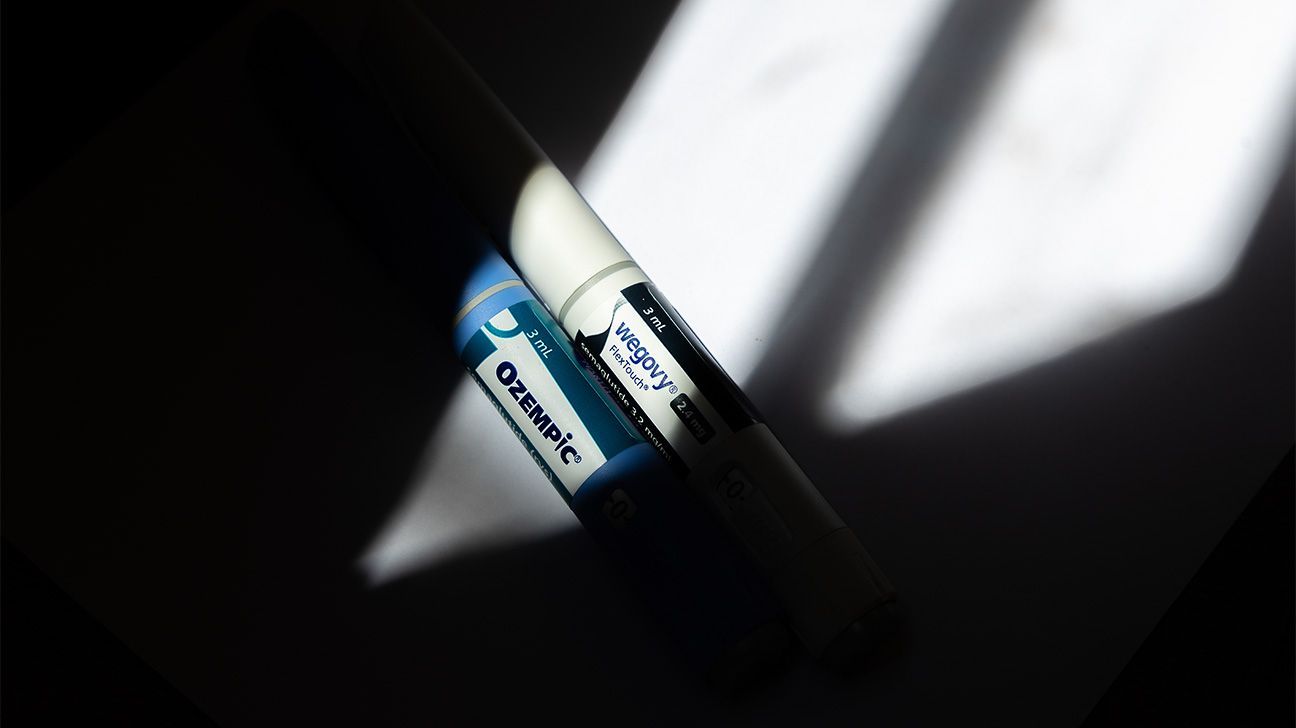
- Researchers report that people taking GLP-1 drugs in daily life don’t lose as much weight as those in clinical trials who take the same medications.
- The researchers add that people using weight loss drugs don’t regain weight as quickly as those in clinical trials.
- One possible reason for the weight loss differential is that people in the “real world” tend to stop taking these medications sooner than people in clinical trials.
People who use commonly prescribed weight loss medications don’t lose as much weight as participants in clinical trials, but they also don’t regain weight as quickly.
That’s the conclusion of a new study published on June 10 in the journal Obesity.
The study authors reported that the weight loss differential was mainly due to the fact that people tend to stop using GLP-1 drugs sooner than clinical trial participants. They also tend to use lower doses of these medications.
The researchers also reported that A1C blood level reductions were similar for both groups of people.
The researchers noted that they will initiate further research into what other measures, such as lifestyle changes or bariatric surgery, people may have adopted after discontinuing weight loss medications such as Wegovy and Zepbound.
The researchers also want to look into why people stopped using weight loss drugs before their program regimen ended.
“Our findings indicate that treatment discontinuation and use of lower maintenance dosages might reduce the likelihood of achieving clinically meaningful weight reduction in patients who initiate obesity pharmacotherapy with semaglutide or tirzepatide,” the study authors wrote.
“Our findings could inform the decisions of healthcare providers and their patients on the role of treatment discontinuation and maintenance dosage in achieving clinically meaningful weight loss,” they added.
‘Real world’ use of weight loss medications
For their study, researchers looked at the health records of 7,881 adults with obesity or weight management issues who did not have type 2 diabetes.
Those people were seen between 2021 and 2023 at the Cleveland Clinic’s facilities in Ohio and Florida. Their average age was about 51 years. Nearly 80% of the subjects were white.
Of those participants, 6,109 were prescribed a weight loss medication such as Wegovy with the active ingredient semaglutide. The other 1,772 were prescribed a weight loss drug, such as Zepbound, with the active ingredient tirzepatide.
About 80% of those subjects were given low doses of their weekly injectable weight loss medications.
Researchers reported significant differences between people using weight loss medications in phase 3 clinical trials and those taking the drugs in the “real world.”
For starters, about half of those taking either medication in daily life stopped within the first 12 months. About 51% of those using a tirzepatide drug discontinued its use in that same time period.
That compares with only 17% of semaglutide users and between 14% and 16% of tirzepatide users in clinical trials who quit during the first year.
In addition, the average weight reduction for semaglutide participants in daily life was nearly 8% after one year while it was 12% for people taking tirzepatide.
By comparison, the average weight loss in clinical trials was nearly 15% for semaglutide subjects as well as 15% for people on low dose tirzepatide and 20% for those on a higher dose of that medication.
In general, weight loss was greater in people who took weight loss medications for a longer period of time.
In addition, about 54% of people who had prediabetes at the start of their treatment plan improved to healthier A1C levels after one year. Around 3% of those studied progressed to type 2 diabetes after 12 months.
Weight loss is a long-term commitment
Mir Ali, MD, a surgeon and bariatric surgeon as well as the medical director of MemorialCare Surgical Weight Loss Center at Orange Coast Medical Center in California, said the main takeaway from this study is that weight loss is a long-term commitment. Ali wasn’t involved in the new study.
“The long-term use of medications is more effective than short-term use,” Ali told Healthline. “The study confirms that obesity is a chronic condition like diabetes or hypertension.”
Sarah Kim, MD, a professor of medicine at the University of California San Francisco, noted that discontinuing medication is common for people being treated for obesity and other conditions. Kim was likewise not involved in the new study.
Kim added that adherence to medication schedules as well as diet and exercise programs isn’t as easy in real life because people don’t have the supervision and support a person gets during a clinical trial.
“Real life is different and results aren’t always as spectacular as in clinical trials,” Kim told Healthline.
Kim and Ali agreed that another reason people stop taking medications is that these drugs can be expensive, even if insurance is picking up part of the cost.
There is also the fact that the side effects from these medications can be severe for some people. Plus, people in real life sometimes just get tired of the obligation of taking a pill or injecting themselves on a regular basis.
Ali and Kim also noted that people need to realize that medications are only a tool to help them eat less. To lose weight and keep it off, a person needs to adopt lifestyle habits such as a healthy diet and regular exercise.
“The medications are not a short-term kickstart. They don’t burn fat,” said Kim. “The medications just help with the suppression of hunger.”
“The ultimate goal of the medications is to give people a tool to get them to a healthy weight,” Ali added.
What to know about GLP-1 drug for weight loss
Glucagon-like peptide-1 receptor agonists (GLP-1s) work by mimicking a hormone in the body that helps regulate blood sugar levels and reduces hunger pangs.
One class of the newer GLP-1 medications uses the active ingredient semaglutide. They are sold under different brand names. Ozempic and Rybelsus have been approved to treat type 2 diabetes. Wegovy is approved for use in weight management. Semaglutide drugs are available as both oral tablets and injections.
The other newer group uses the active ingredient tirzepatide. Mounjaro is approved to treat type 2 diabetes. Zepbound is approved for use in weight management. These medications are available only as injections.
Previous studies have highlighted the effectiveness of these drugs on helping people lose weight.
Past research has also indicated that these weight loss drugs can help lower a person’s risk of cancer as well as provide benefits to heart health and brain health.
Experts say the medications have proven to be effective and their use is likely to increase.
“This is a massive market and it’s not going to go away,” Ali said. “These medications are going to continue to be a big part of weight loss programs.”