
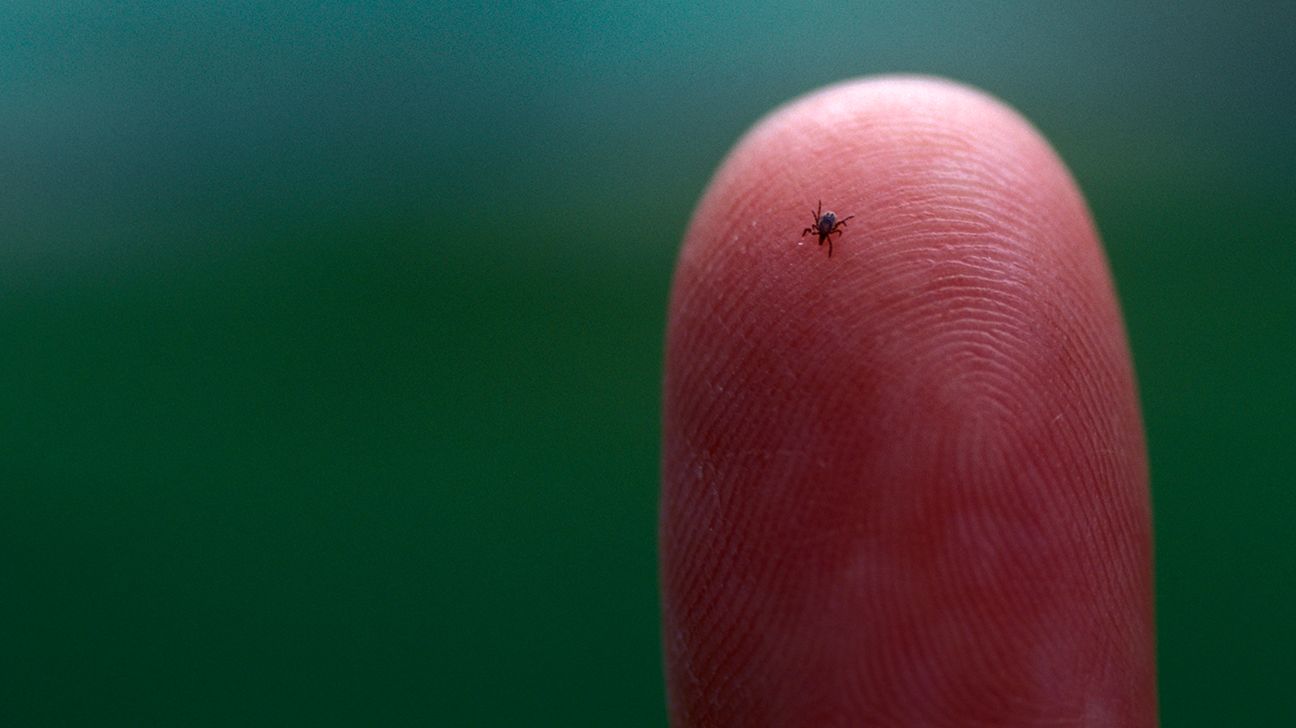
- Health officials report an increasing number of tick bites across the United States as the regions where the insects typically breed have expanded.
- Experts cite climate change as a major factor in the rise and spread of tick populations and the diseases they carry.
- Infected ticks can transmit Lyme disease, Rocky Mountain spotted fever, and other illnesses by biting humans.
- You can reduce your risk of tick bites by wearing clothes that cover your arms and legs and checking yourself and your pets for ticks after outdoor activities.
Ticks are being found in more places in the United States, which means the risk of Lyme disease and other tick-related illnesses is also on the rise.
The Centers for Disease Control and Prevention (CDC) reports the highest rate of tick bites in more than five years.
According to the CDC, there were 74 tick bites per 100,000 emergency room visits in the United States in July, the highest rate for this month since 2017.
That rate reached a high of 134 tick bites per 100,000 emergency room visits in May, the highest for that month since 2019.
Tick bites are especially prevalent in the Northeast region of the country. The CDC has recorded 127 such bites per 100,000 emergency room visits in that region so far this year. That area hit a high of 283 bites per 100,000 visits in May.
The next most prone area is the Midwest, with 85 bites per 100,000 emergency visits. The Southeast sector has a rate of 35 bites per 100,000 visits, while the West has 16 bites per 100,000 and the South-Central area has 10 bites per 100,000.
“Over the past 20 years, tick habitats have been expanding gradually in the United States, William Schaffner, MD, an infectious disease expert and professor of preventive medicine at Vanderbilt University in Tennessee, told Healthline. “Since tick bites can spread certain infectious diseases, the geographic areas impacted by these infections has expanded along with the ticks.”
“Doctors have had to become more aware of these tick-transmitted infections and the general public needs to become mindful of how to prevent tick bites when they go out into nature,” he added.
Why are ticks becoming more common?
Durland Fish, PhD, the chief executive officer of the American Lyme Disease Foundation, said that the deer tick, which transmits Lyme Disease, has expanded its range to 16 northern states during the past 50 years.
Fish, who is also a professor emeritus of epidemiology at the Yale School of Public Health in Connecticut, said the expansion of this particular tick is due to the reintroduction of the deer into regenerated forest regions.
“The deer tick is completely dependent upon white-tailed deer for reproduction. No deer, no deer ticks. No ticks, no tick-borne diseases,” he told Healthline.
Fish noted that the lone star tick, which carries ehrlichiosis, has been increasing its range northward over the past several decades. He said land use is the primary reason.
“Suburbanization has resulted in more human contact with ticks as people moved into suburban forested areas and deer hunting was restricted for safety,” he explained.
Fish added that the range of the dog tick vector of Rocky Mountain spotted fever has been relatively stable.
Still, experts say climate change is a major factor in the increase and spread of ticks and tick-borne diseases.
Amanda Roome, an associate director of the Tick-borne Disease Center and former graduate student at Binghamton University in New York, said in a report published by the university that warmer temperatures caused by climate change are allowing ticks to thrive.
Schaffner agreed. “The expanded tick territory has resulted from climate changes, which has made some previously cooler areas now warmer, creating a more congenial habitat in which ticks can thrive,” he said. “Also, winters have been shorter and less severe, giving ticks the opportunity to be active longer.”
What diseases are transmitted by ticks?
Different types of ticks live in different regions. According to the CDC, while there are many different tick species found around the world, only a handful bite and transmit bacteria, viruses, and parasites (pathogens) that cause diseases in humans.
The CDC notes that a specific tick species found in a U.S. region does not always mean it will transmit a specific disease in that area. Multiple factors affect the transmission of tick-borne disease and illness.
Two of the most common tick-borne diseases are Lyme disease and Rocky Mountain spotted fever.
“Lyme infection can produce a variety of symptoms, most prominently chronic joint pains,” said Schaffner. “Rocky Mountain spotted fever is an acute illness with high fever and a rash. Both these infections can be treated with antibiotics and supportive care when diagnosed promptly.”
The CDC states there are a variety of other diseases that ticks can carry. They include:
- anaplasmosis
- babesiosis
- bourbon virus
- Colorado tick fever
- Powassan virus
- Rickettsia parkeri rickettsiosis
- tularemia
What to know about Lyme disease
The CDC estimates that about 476,000 people are diagnosed and treated for Lyme disease each year in the United States.
Lyme disease was first recognized in 1975 in the town of Old Lyme, Connecticut.
It’s an infectious disease caused by bacteria carried by black-legged ticks, also known as deer ticks.
The ticks contract the bacteria after feeding on infected animals such as deer, mice, and birds. They transmit the bacteria to people by biting them.
Lyme disease can develop in humans in as early as one day to as long as several years.
One of the earliest – and most common – symptom of Lyme disease is a bull’s-eye rash, also known as an erythema migrans.
Other early symptoms include:
- chills
- fever
- enlarged lymph nodes
- sore throat
- vision changes
- fatigue
- muscle aches or headache
Symptoms for later-stage Lyme disease can range from abnormal heart rhythm to numbness to meningitis.
Treatment for early localized Lyme disease is a 10-to-14-day course of oral antibiotics.
Medications used to treat the disease include:
Later-stage Lyme disease can affect the circulatory or central nervous systems and even cause joint damage in its most serious forms, and may require up to 28 days of treatment with antibiotics.
There is current research and clinical trials looking into the possibility of a vaccine to help prevent Lyme disease.
How to prevent tick bites
There are a number of simple, practical ways to help reduce your risk of getting bitten by a tick.
Roome has a varied list of suggestions. Among them:
- Cover up: Wear long-sleeved pants and shirts.
- Check yourself: Be sure to examine your clothing and skin for ticks after a walk in the woods or any other natural space.
- Lighten up: It’s easier to spot ticks on lighter-colored clothes than darker-colored clothes.
- Spray your clothes: Apply the synthetic insecticide permethrin to the outside of your clothes.
- Use DEET: Studies are inconclusive, but Roome said it can’t hurt to use DEET – even if it just protects you from mosquitoes.
- Stay on designated paths: Ticks are mostly found in bushes, branches, and undergrowth, so hike in the middle of a path.
- Check your pets: A tick can “ride home” with a dog or other animal, so check your pets for ticks in the field and at home.
- Roll them off: Use a lint roller (the kind with sticky paper) on yourself and your pets. The ticks will stick to the roller instead of you.
- Dry your clothes: Ticks can actually survive the washing machine, but they can’t live through a cycle in the dryer.
Fish, however, believes the most effective prevention method starts with the deer population.
“Prevention efforts should target deer,” he said. “There is research underway to treat deer that will kill ticks with an oral bait, but it is grossly underfunded in favor of human vaccines promoted by the pharmaceutical industry.”
Schaffer notes you don’t have to be in the great outdoors to get bitten by a tick.
“You do not have to hike in the woods to acquire ticks,” he said. “You can encounter ticks in your backyard if you are clearing underbrush, which is how I acquired a couple of ticks a few years ago, so take precautions even close to home.”
“One study showed that golfers who chased their errant shots into brushy areas were more likely to pick up ticks along with their golf balls,” he added.
He also urged caution when removing a tick from your skin.
“If you find an attached tick, carefully remove it,” he said. “The best way is to use a tissue, grasp the tick firmly as close to the skin as possible and then gently pull it out. Do not pull with a sudden jerk as that may leave the tick’s head embedded in your skin.”