
Getty Images
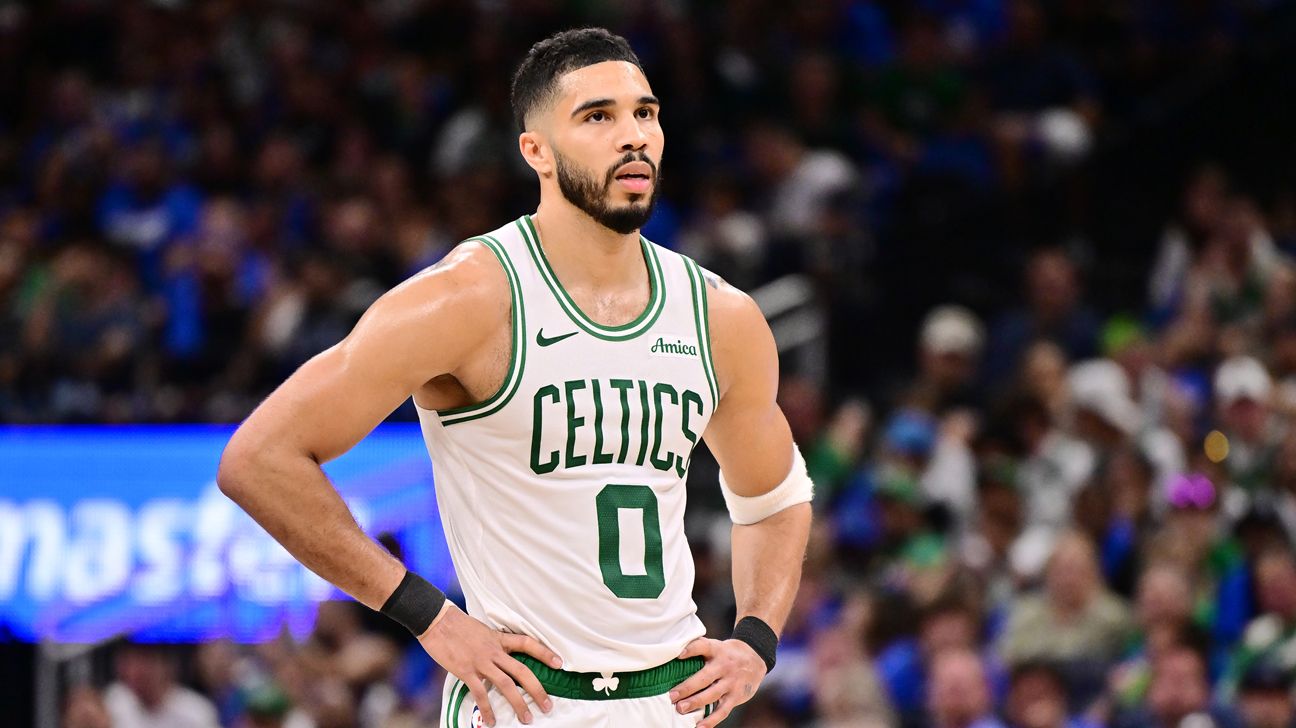
- NBA star Jayson Tatum of the Boston Celtics opens up about rupturing his Achilles tendon during the Eastern Conference playoffs in May.
- The two-time Olympic gold medalist shares how me managed pain after his injury.
- Tatum discusses his appreciation for his family, his health, and his love for the game.
When Boston Celtics star and two-time Olympic gold medalist Jayson Tatum ruptured his Achilles tendon on May 12 during the NBA playoffs against the New York Knicks, he knew it was significant.
“Being a basketball player, we understand movements related to certain injuries. When I pushed off, I could hear it pop. It felt like somebody kicked me, but I knew nobody was behind me,” Tatum told Healthline. “So immediately when I heard it, I fell and I grabbed my calf and I knew what just happened.”
The next day, he underwent surgery to repair his Achilles tendon.
“When I had surgery, they gave me [an opioid for pain] at 8:00 p.m., and at midnight, then they woke me up again at 4:00 a.m., and I was so nauseous and I felt so sick and out of it. I told my trainer I would rather tough it out with the pain because the medicine that they gave me is making me feel worse,” Tatum said.
It had been 19 weeks since the injury when Healthline spoke with Tatum about his recovery and why he switched to a non-opioid medication for pain management. Here’s what we learned.
Non-opioid medication helped Tatum find relief
Tatum’s doctor, Martin J. O’Malley, MD, orthopedic surgeon at Hospital for Special Surgery (HSS), changed Tatum’s opioid medication to Journavx, a non-opioid pain medication.
While opioids relieve pain by interfering with nerve signals that transmit pain from the body to the brain, they also activate the brain’s reward system, releasing large amounts of the feel-good dopamine. Because of this, they carry the risk of addiction.
“[Journavx is] works differently by reducing signals before they reach the brain and are felt as pain,” O’Malley told Healthline. “[It] works in the peripheral nervous system and never reaches the brain, so it has no risk of addiction.”
However, he noted that everyone’s experience is different, and as with any medication, people could experience side effects, and should talk with their doctor about the safest pain relief options for them.
Tatum teamed up with the makers of Journavx to speak out about how it helped him through his injury.
“This recovery and the rehab process is a long one,” Tatum said.
“There’s just so many different phases. You have surgery, then two weeks later you get your stitches out, and then they put you in this boot for 10 weeks, and then at four weeks you get crutches and you’re introducing 50% weight bearing,” he said.
By that point, Tatum continued to experience some discomfort and talked with his doctor about it.
“He prescribed me non-opioid medication for moderate to severe acute pain and for me it really helped. It took the pain away,” said Tatum.
Because Tatum’s injury was so public, he said he hopes to connect with others by sharing his story.
“Obviously I’m not the only one in the world that’s dealt with an injury that causes pain, so I thought it was a perfect opportunity to be vulnerable, talk about what I’m dealing with, my process, and be a conversation starter for people and their doctors about different choices and options.”
Tatum leaned on fans’ support during his recovery
After his injury, Tatum had a hard time accepting he would miss a year of playing.
“I was in disbelief. I was sad. I wasn’t sure if I was up for what was all about to happen or be required for me to come back. I was like, I don’t know if I can do this,” he said. “It’s tough. You’re lying there, you got this splint on, and your foot is all wrapped up and elevated, and you can’t put pressure on it, and you’re just like, ‘How am I ever going to play basketball again?’ It’s just kind of hard to envision in that moment.”
He leaned on the support of his friends, mom, and two children, 7-year-old Deuce and 14-month-old Dylan.
“Even when they didn’t know they were uplifting my spirits; it’s like being around them and laughing and joking on some of those tough days, it was just helpful,” he said.
He also leaned on his fans’ support through social media.
“They were checking on me, praying for me, wishing me a speedy recovery. It really does go a long way and I’m very thankful for that,” Tatum said. “Obviously I love the game for my teammates, but just as importantly for the fans that appreciate what I bring to the game.”
Generally, the return to play for a professional athlete who ruptured their Achilles tendon is 9 to 12 months, said O’Malley.
“That means you’re back performing at the same level you did before. For a regular person, the recovery time is closer to 10 to 12 weeks to get back to normal activity — walk around wearing regular shoes, get to work without public transportation, etc. — and closer to 6 months to feel like you’re no longer injured,” he said.
Physical therapy is the most important part of recovery, he added.
“If a player works hard at their physical therapy post-operation, they will return to the same performance level as when they were injured,” said O’Malley. “Jayson has been a model patient. No one has outworked him in terms of his rehab.”
A new appreciation for health and basketball
As he moves on in his professional basketball career, Tatum said he values his health more than ever.
“When I first got to the NBA, I was 19. I didn’t value eating the right things or sleeping as much, or lifting or recovery as much as I do now,” Tatum said.
“As you get older and throughout your career, we play so many games. The season is so long. I’m only 27, so I’m still very young, but the more basketball I play, the more I value sleep and eating better. It’s about understanding that the investment you put into your health and your body will prolong your career.”
With each season, his appreciation for his ability to play grows.
“I never was a person that cheated the game. I never took shortcuts. I always tried to maximize the God-given ability that I had,” he said. “I love to play, I love the game, and so I always had a deep level of appreciation for the game of basketball, what it’s done for my life, what it’s done for my family, and it’s as high as it can be now.”