
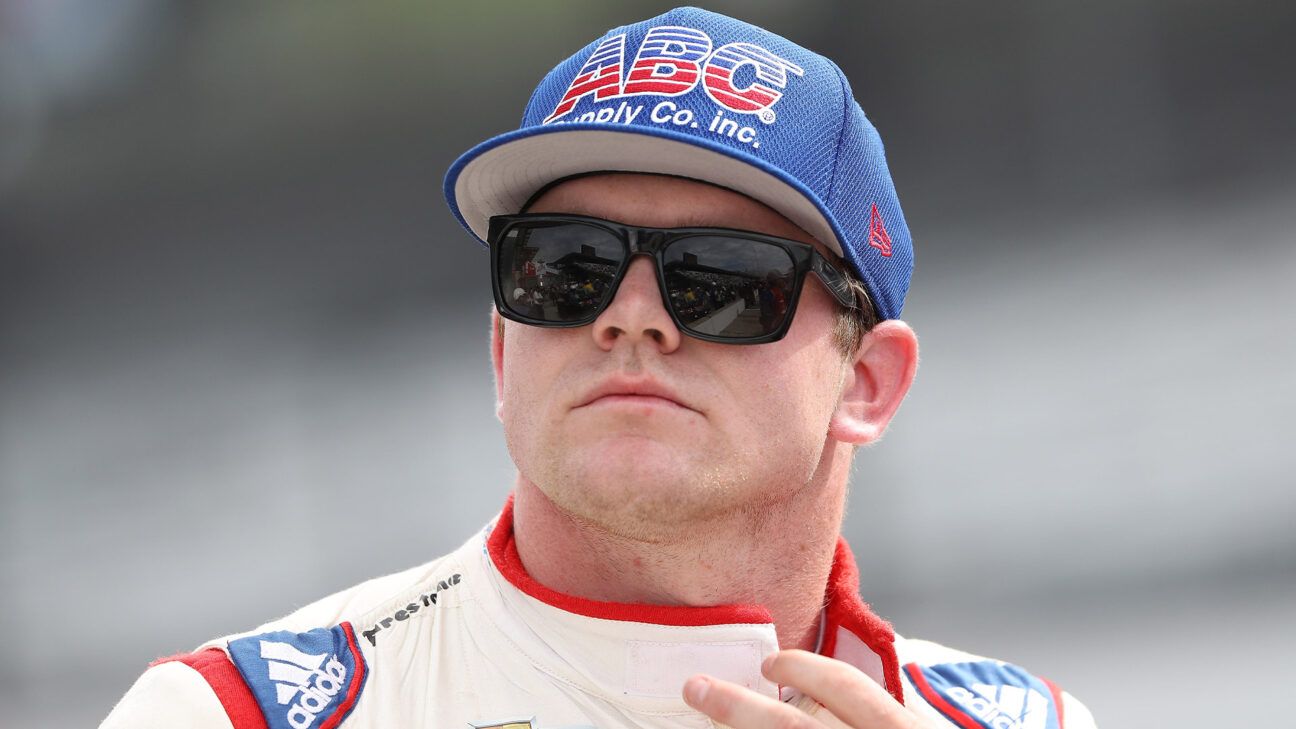
- Indy 500 race car driver Conor Daly shares his journey of living with type 1 diabetes.
- Daly has been living and racing with type 1 diabetes for more than 15 years.
- He is sharing his story to inspire others to take control of their diabetes and reach for their goals.
At 14 years old, American racing driver Conor Daly was rushed to the hospital, where he learned that the weight loss and extreme thirst he was experiencing were symptoms of type 1 diabetes.
“It was very new to my family. We had no family history of it, and I personally, as a young kid, had no idea what type 1 diabetes was,” Daly told Healthline. “I thought, ‘I’m going to get out of this hospital and go on with my day,’ and it turns out there was slightly more work than just that, so my parents were learning. I was learning.”
While he adjusted to his diagnosis, he didn’t let it stop him from racing. A few days after he was released from the hospital, he raced.
“I was lucky because in my town of Indianapolis, racing and motorsport in general is massive, and my dad was a race car driver, so folks knew our family, and no one was going to say, ‘Hey, you need to stop what you’re doing,’” Daly said.
Racing forward with type 1 diabetes
Managing type 1 diabetes has come a long way since Daly was first diagnosed more than 15 years ago. For years, he had to prick his fingers throughout the day to measure his blood sugar reading.
“When we first got into the CGM era, the constant glucose monitoring and the ability to use a Dexcom was pretty outstanding,” he said.
He now uses the Dexcom G7, which he calls a “life assist.”
“In racing, there’s a ton of data that we look into. We have sensors on every piece of the car; we can process so much data, and all that data helps us go faster,” Daly said.
The Dexcom G7 does the same for his everyday life.
“If I’m going to get more data to look at to be a better athlete or better human, to live more efficiently, I’m going to use it cause I’m a competitive person,” he said.
While advancements in insulins, CGMs, and automated insulin delivery (AID) all help people better manager their condition, Dr. Kathleen Wyne, an endocrinologist at The Ohio State University Wexner Medical Center, said the patient still has to do the work of managing their devices.
How Daly manages type 1 diabetes during races
Daly says preparation is key, especially as he prepares for races.
“I try to keep the same meal every day at the track, usually have some protein and pasta for some carbs, but nothing that gets too out of the ordinary because consistency for me certainly is key,” he said. “I’m not going to be like, I think I need some different food all the sudden on race day because it’s not as predictable as what you already know.”
His team is at the ready with necessities near his car during practices and races.
“I’ve got a Gatorade there, whatever it is with sugar that’s necessary, and then when I get in the car, I have a bottle that has something with glucose in it and some sort of sugar that I can use if necessary,” Daly said.
Adrenaline that is produced while he’s driving 240 miles per hour may also affect his body.
“When the mind or body are significantly stressed, it generates stress hormones that make the body resistant to insulin and typically blood sugars rise, Dr. Andrew Welch, an endocrinologist at UC Health, told Healthline.
Having constant monitoring of his blood sugar levels from his team and family members while racing allows Daly to focus on driving. The extra work for him comes before he jumps into the car.
“I have to make sure that my sugars are going the right direction and that the glucose levels are exactly what I’m wanting — going up rather than down — before I’m getting into the race car,” Daly said. “That part is slightly annoying of course, but it’s never caused an issue in my whole career to where I do have to worry about it. I’m so aggressive with how I prepare and how I keep myself strictly in line and ready to go.”
He added that being diligent in preparation is about more than himself. By racing healthy, he believes he is leading by example for other aspiring drivers with type 1 diabetes.
“You want to hold yourself up to a higher standard to make sure that everyone sees we can compete just the same as anyone else who is not living with diabetes,” Daly said.
A driving force for diabetes awareness
Type 1 diabetes used to be seen as a life-limiting disease.
“This includes limited ability to participate in specific activities such as sports and limited lifespan due to potential complications of type 1 diabetes,” Welch said.
With advances in the management of the disease, this is no longer true, and almost any activity is safe to pursue with appropriate medical supervision, he said.
“People with type 1 diabetes are not fragile or outwardly different. You could know an individual with type 1 diabetes for years without realizing it,” he said.
Wyne tells her patients who are newly diagnosed with type 1 diabetes that they are still a normal person who just happens to require insulin.
“It should not limit your life goals and activities. I encourage people with type 1 diabetes to pursue any activities or profession that they are interested in and that we will support them in any way we can,” she told Healthline.
Daly is the perfect example of this and hopes to lead by example.
“Sometimes I hear from kids that they think they can’t do something, and I tell them that’s wrong,” he said. “I have not stopped doing anything in my life diabetes-related. For us, it was something we had to adjust to, and I was working on it.”
His condition hasn’t stopped him from jumping out of airplanes, completing a back flip on a dirt bike, and racing in every Formula One car and multiple NASCAR Cup Series and IndyCar Series.
In 2017, he participated in American Ninja Warrior and Amazing Race.
“Not everyone has the same situation of what they have access to, but if you are taking care of yourself…you can do anything you want,” said Daly. “I don’t see any reason to ever put a limit on yourself.”